

Donovan Mitchell Finally Made It — Then Watched It All Slip Away
The Cavaliers star put together one of the finest seasons of his career, but a stunning ECF collapse and a looming contract decision have left him and Cleveland with more questions than answers.

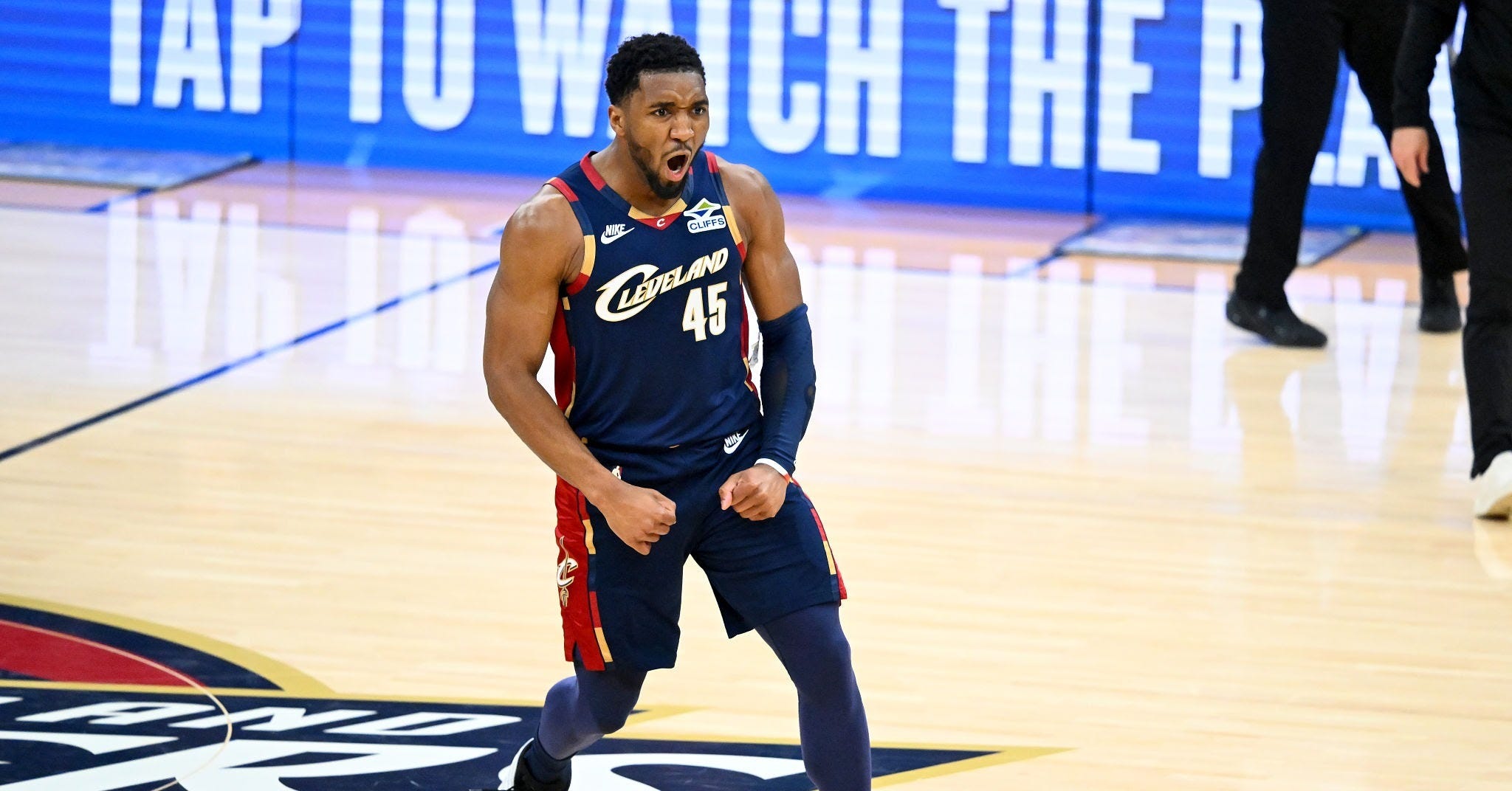
“We lost, we f---ing blew it.”
Donovan Mitchell didn’t mince any words following the excruciating Game 1 in the Eastern Conference Finals, a game that has cut straight into the heart of how this season unfolded.
The 2025-26 season was supposed to be the year everything clicked for the Cleveland Cavaliers, with Mitchell at the helm. For him, it was that kind of season. The guard in his ninth season in the NBA averaged 27.9 points, 5.7 assists and 4.5 rebounds per game, earned a spot in his seventh consecutive All-Star Game, finished on the All-NBA Second Team and led the Cavaliers to the Eastern Conference Finals for the first time since 2018 — the first time without LeBron James on the roster since 1992.
More than that, he had finally crossed the threshold of a conference finals appearance that he had been chasing since he was a young guard with the Utah Jazz. But with the New York Knicks sweeping Cleveland with an average scoring margin of 19.3 points, that same allure did not feel quite as good as it had just over a week prior.
That tension sits at the epicenter of this season. The breakthrough had finally arrived. The ceiling had been raised. But what happened in that conference finals series, most notably with that fourth quarter in Game 1, blurs any accomplishment that the team had reached in the past nine months.
The Season That Was
Before we get into the mess at Madison Square Garden last month, it’s worth reiterating what Mitchell had actually done leading up to that point. Those 27.9 points per game clocked in as the second highest average of his debut season in Cleveland where he averaged 28.3, and with his two extra games played, 2025-26 was the most total points of his career. That drive was on full display early on in the season, when no single player on the Cavs had appeared in all 26 games by late December.
Then (you’ll notice this trend throughout my player review series), the James Harden trade changed everything. Following a 17-16 start in January, the Cavaliers would go 22-9 starting on Feb. 4, secured home-court advantage and took home two Game 7s over the Toronto Raptors and the No. 1-seeded Detroit Pistons, with Mitchell littering his playoff greatness throughout, highlighted by his 43 points in Game 4 against the Pistons where he tied the playoff record for most points in a single playoff half with 39.
For one night, it looked as if Mitchell was a player good enough to carry a team all the way to a championship. Just two weeks later, the Knicks were off to the NBA Finals.
How It Unraveled
Looking back, the series was a much more difficult climb than I had expected. The Knicks (as evident by their 2-0 lead in the Finals as of writing) are a team playing at the highest level with the depth to match. But despite how much I dislike the rest excuse, I believe that there is some merit for bringing it up.
By the time the ECF had tipped off in Game 1, New York had been waiting around for nine days following a sweep of the Philadelphia 76ers while Cleveland had just 36 hours following the end of Game 7 before tip-off in MSG. Further than that, dating back to Game 5 of the first round on April 29, the Cavaliers played nearly a month without more than a day of rest. Kenny Atkinson acknowledged it following the sweep, but stopped short of pointing all issues toward the breakdown, noting the two Game 6 losses as crucial opportunities that the team squandered.
“That’s not to say that if we win those Game 6s we beat the Knicks,” Atkinson said. “I’m not saying that, but I think it gives us a better chance.”
As he said, this wasn’t just an open-and-shut case of the Knicks overmatching the Cavaliers from the tip. Cleveland had built that 22-point lead with some of the best basketball they played in these past playoffs through three quarters, but could not close it out. If anything, that’s a knock on the long-criticized mental makeup of this team with both execution and shot selection. The fatigue certainly doesn’t help, but writing it up to just that does a disservice to this story.
The Extension
Mitchell officially becomes eligible for another extension on July 7, where Cleveland can offer him four years, $272 million. But further on the horizon than that in 2027, Mitchell is eligible for a five-year deal that is worth $350 million once his 10 years of service unlocks that includes a no-trade clause.
The obvious move for Mitchell is to wait. The extra year, much larger number and no-trade clause make it too hard for him to pass up — and rightfully so. But this question has a double-edged sword. Mitchell, who turns 30 in September, will be 35 entering the final year of that supermax. And while Mitchell had some extraordinary moments in these playoffs mentioned above, there were a lot of cold moments from him when he was needed — notably his three points on 1-for-6 shooting in the fourth quarter and overtime in Game 1 against the Knicks. Despite the greatness he’s displayed with the Cavs, Cleveland must decide whether that long-term commitment even makes sense for them.
Despite this, his love for the city has never wavered. “I love it here. I don’t know how else to say it.” There’s no reason to doubt him given his insistence, but the noise won’t quiet down and probably never will. Every rough stretch next season is likely to get filtered through the “Mitchell still hasn’t signed” lens regardless of what both sides say publicly.
What Comes Next
Nine hard-fought seasons to get to the conference finals only to get swept.
That’s a dynamic that Mitchell and the Cavaliers have to live with this summer. His own production is undeniable, with a history of carrying teams in moments where many would shy away. But his team results haven’t followed with those numbers, and an ECF sweep is yet another data point in the argument against whether Mitchell can be a No. 1 option on a championship team.
He’s in the midst of his best years in the league as a 29-year-old veteran, but now nine years later he’s learned a new understanding of the gap that still puts him and the Larry O’Brien Trophy against each other. “It’s taken me nine years to get here,” he told Andscape. “You’re very grateful... but there’s another level to it.”
There is another level somewhere, but whether this is the roster to do it is the biggest question, and this summer will be the deciding factor in that argument.